Oliver Wolfs & Coach Vic
TL;DR
Seven metrics tell the full story of sponsorship ROI: Audience Reach, Media Exposure Value, Brand Interaction, Sales Generated, Indirect Earnings, Customer Lifetime Value, and ROSI. Most teams only track the first two - which is why most sponsorship investments look weaker on paper than they actually are.
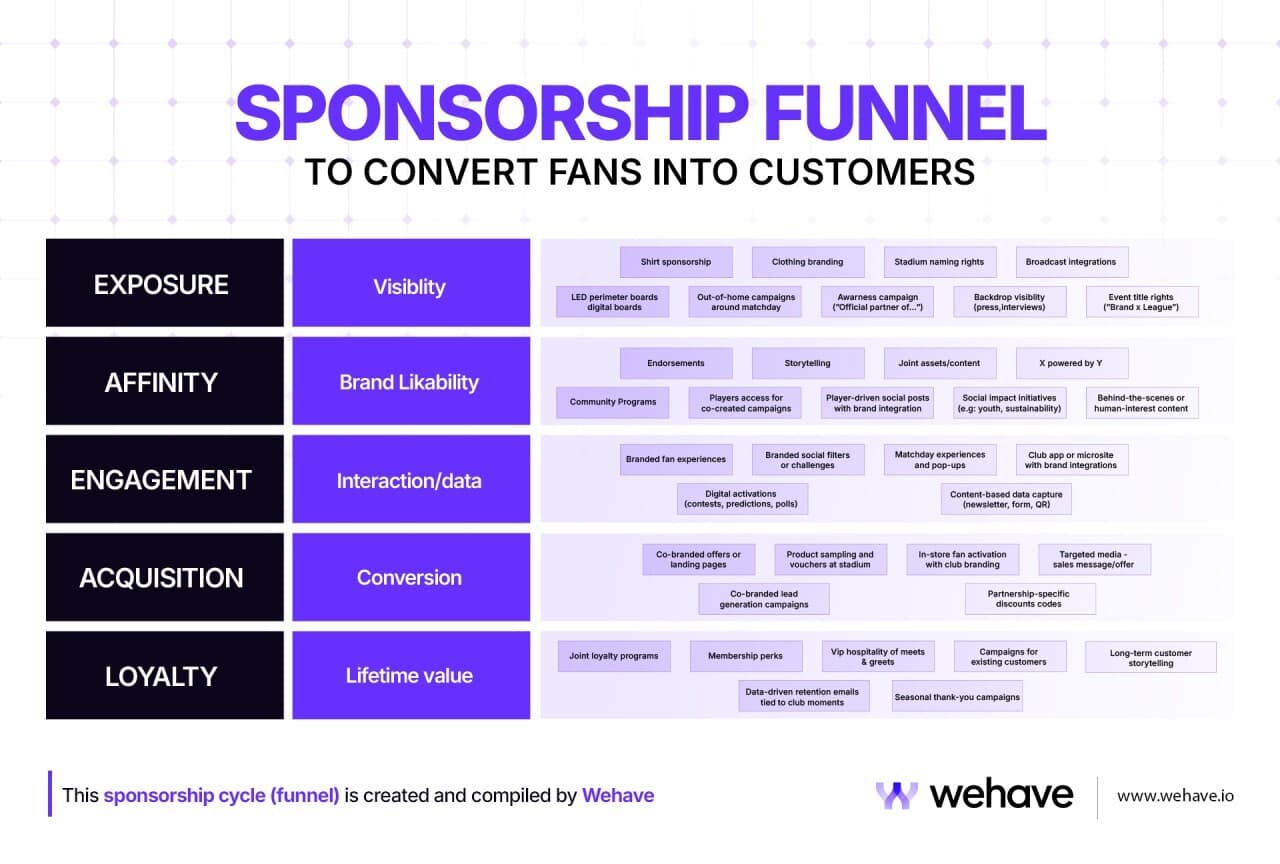
Tracking sponsorship ROI in sports is essential for understanding the value of your investment. Here are the 7 key metrics you need to measure success:
These metrics provide a complete picture of sponsorship performance, helping brands make data-driven decisions and build stronger partnerships.
Audience reach provides a baseline for evaluating the effectiveness of a sponsorship. This metric captures how many people encounter a brand through sponsored events or activities - spanning TV broadcasts, social media, and live events to give a broad view of brand visibility.
To get accurate results, brands need to merge data from different sources and focus on metrics tied to business goals - impressions and clicks - rather than vanity numbers with limited commercial value.
Here are some key metrics and tools for tracking audience reach:
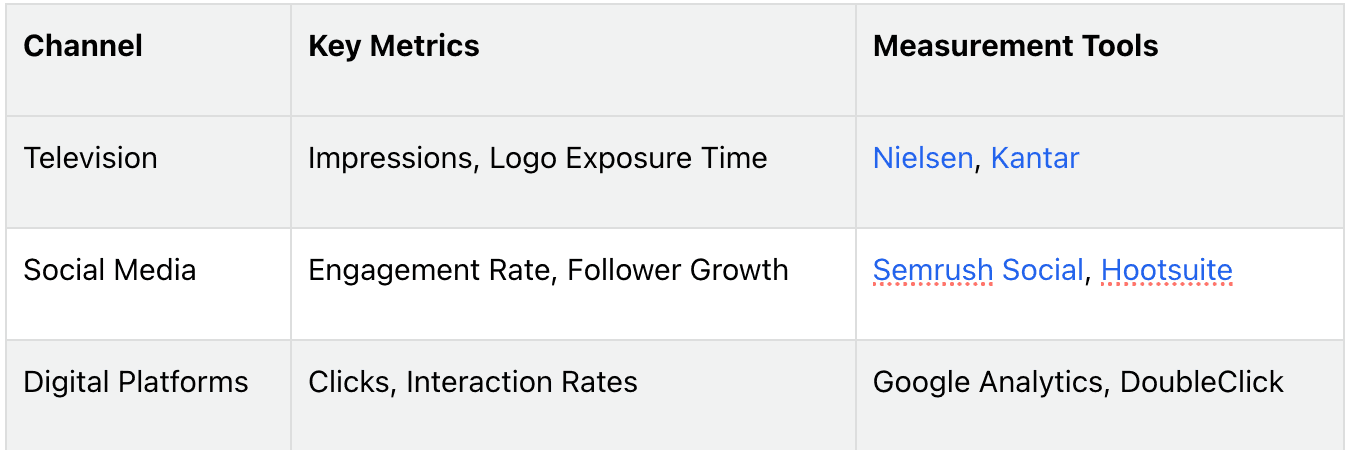
This well-rounded approach gives sponsors a clear picture of how their sponsorships perform and helps justify marketing investments. By fully understanding the extent of their audience exposure, organisations can make smarter decisions about future sponsorships and improve current partnerships.
Media exposure value measures the financial return from publicity gained through sports sponsorships across different media platforms. It answers the question: how much would it cost to buy the equivalent advertising coverage the sponsorship generated?
Direct exposure includes visible branding such as logos on screen, while indirect exposure covers social media mentions and press coverage. During major events like the NBA Finals, sponsors analyse how long their logos were visible and the level of digital engagement to estimate total media value.
Here's how various channels contribute to calculating media value:
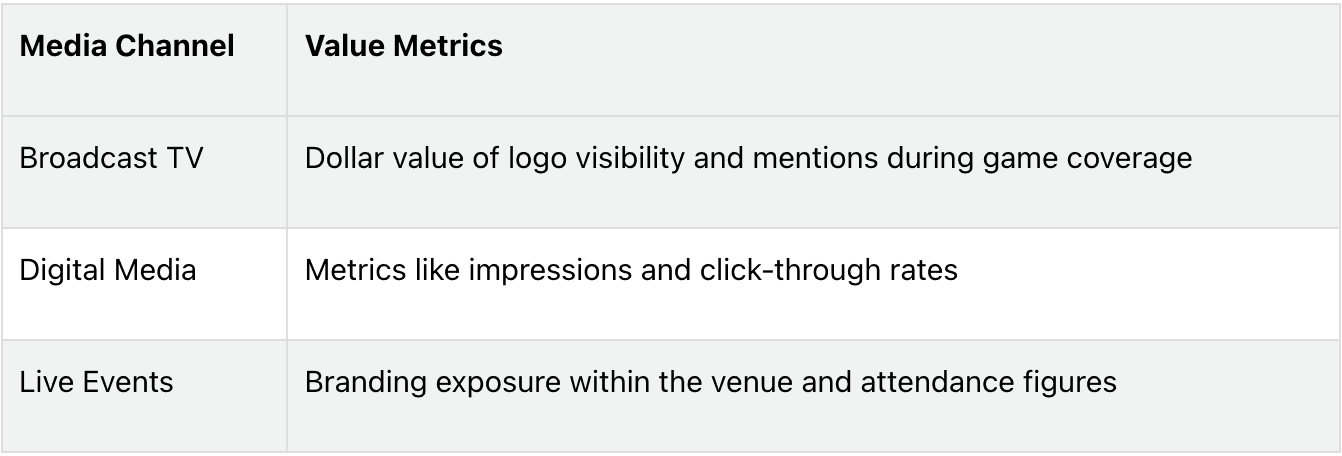
This metric offers actionable insights into sponsorship performance, helping organisations refine their strategies and allocate resources wisely.
Brand interaction looks at how engaging with your audience across various channels influences business results. Where audience reach tells you how many people saw the brand, interaction tells you how many chose to engage with it.
Different channels play distinct roles in measuring ROI:
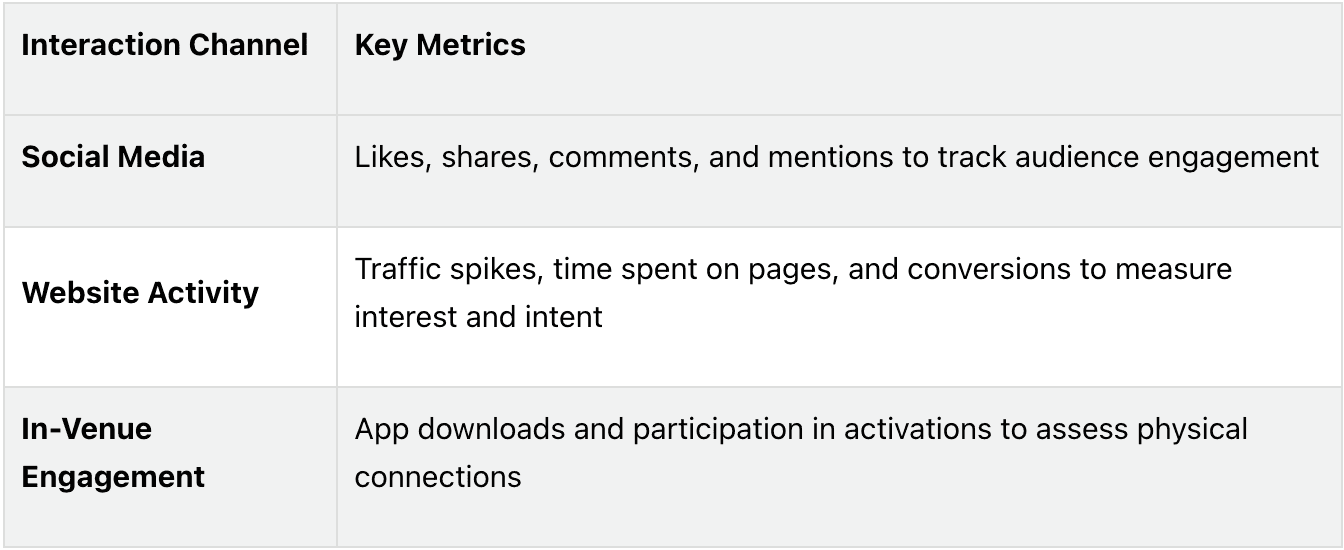
Strong engagement ties directly to higher customer loyalty and better conversion rates. Comparing engagement rates to industry benchmarks helps set achievable goals and fine-tune your approach. Combining these data points offers a broader view of engagement beyond surface numbers.
Sales are the most direct way to gauge sponsorship ROI. When brands create strong connections with their audience, it translates into revenue - but only if those connections are tracked properly.
Here's how businesses commonly track sponsorship-driven sales:
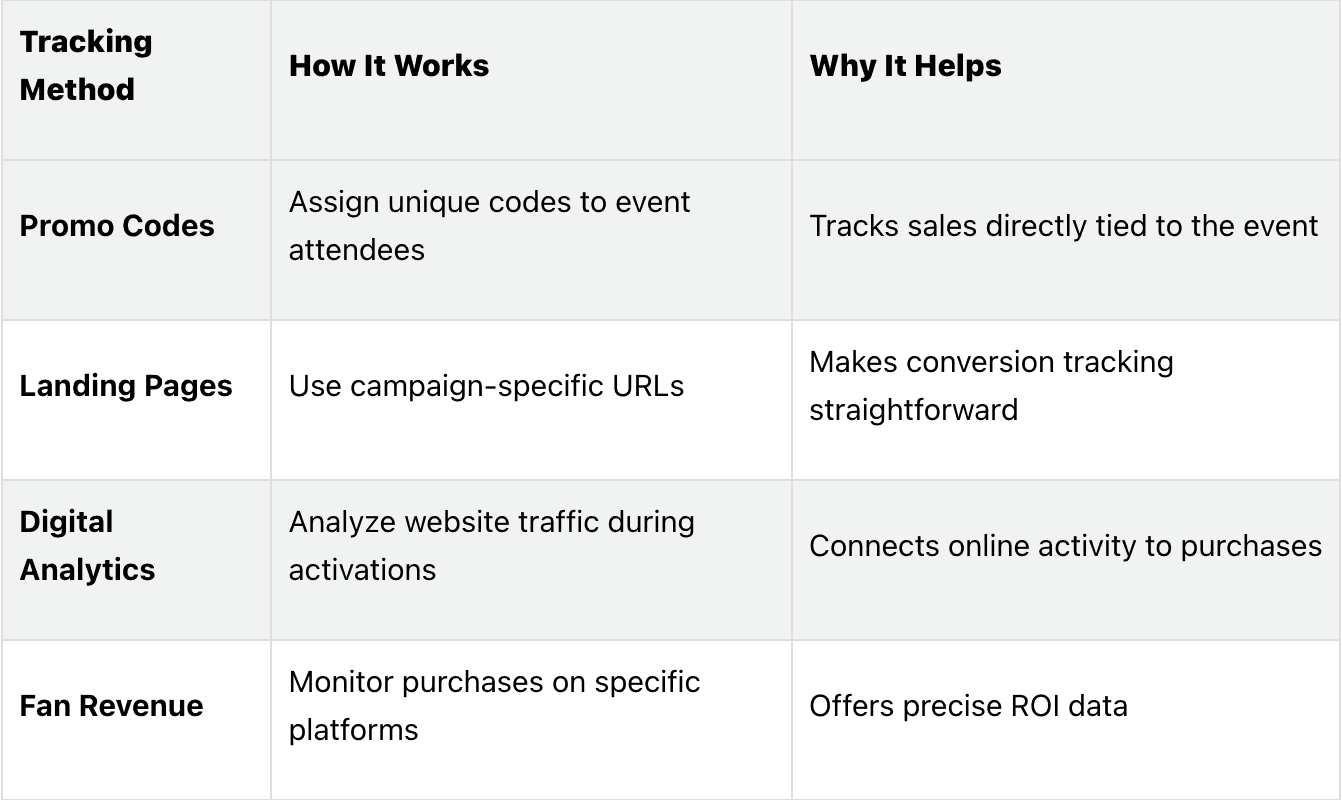
It is crucial to track immediate revenue, post-event sales trends, and sales across digital and physical channels. Some benefits take time to show - so monitoring both short-term spikes and long-term growth is equally important.
“A betting company tracking €5.5M in revenue generated by registered fans while only paying €2M in sponsorships - that is the level of precision modern tracking makes possible.”
Direct sales provide quick results, but indirect earnings highlight the broader, long-term financial effects of sponsorships. These include benefits like improved brand recognition, stronger customer loyalty, and increased market share - factors that often extend well beyond immediate transactions.
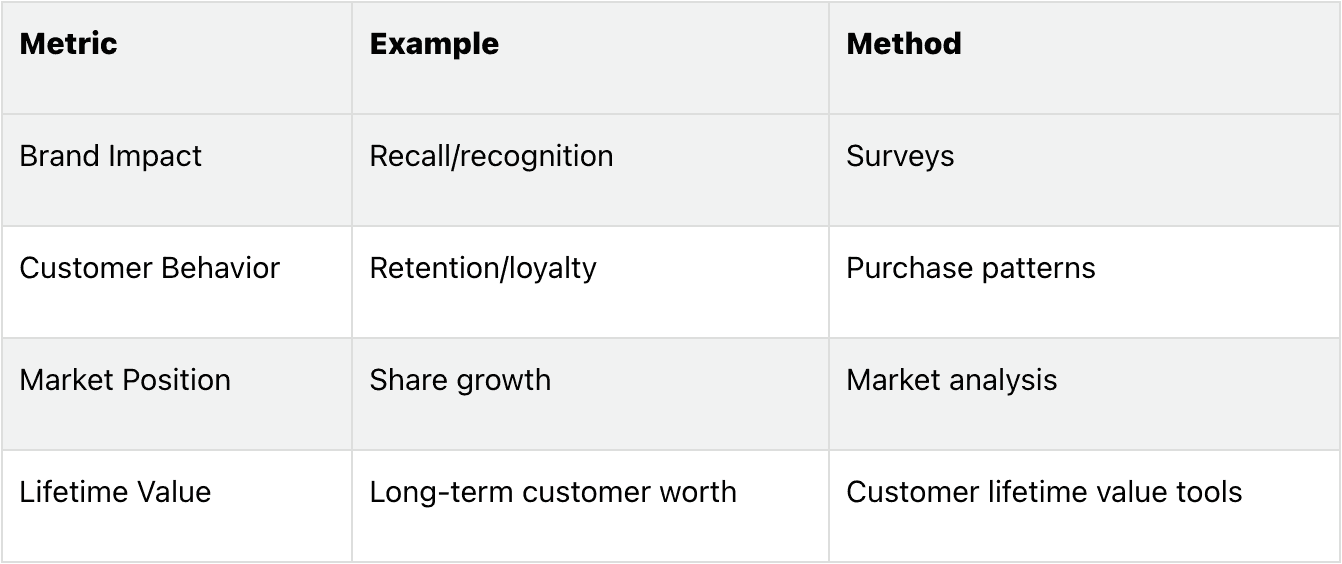
Since some benefits take months or even years to materialise, consistent long-term tracking is critical. By digging into indirect earnings, brands can better understand how sponsorships build lasting customer relationships and drive overall value.
“The key to measuring indirect earnings lies in using a combination of quantitative and qualitative metrics, establishing clear objectives and benchmarks, and leveraging data-driven models to simplify and standardise measurements.”
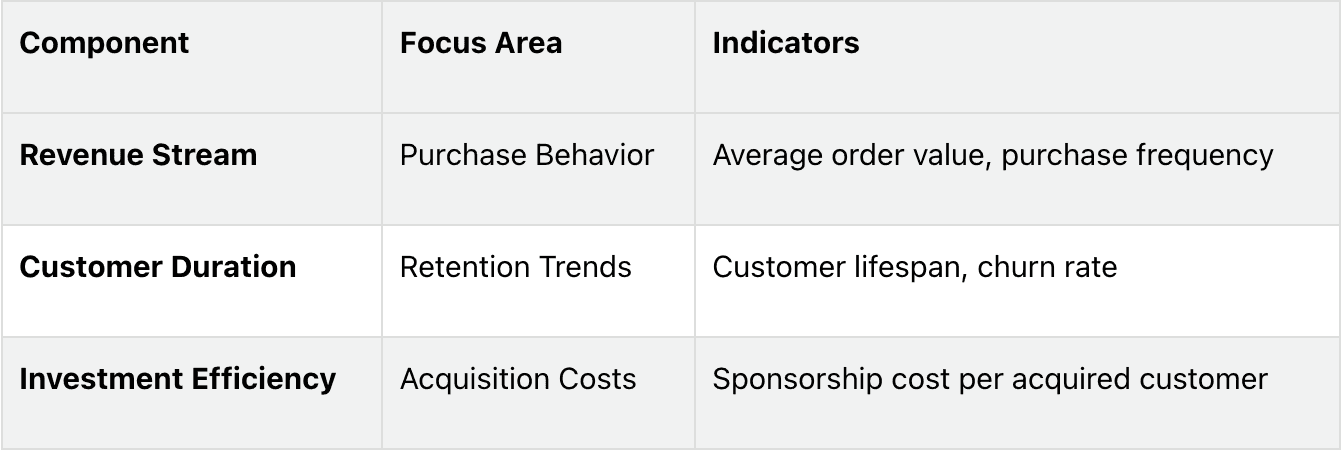
Customer Lifetime Value (CLV) measures the long-term financial impact of customers gained through sponsorships. This metric shifts the focus from short-term wins to how sponsorships contribute to sustained revenue over months and years.
CLV is calculated by multiplying the average revenue per customer by their lifespan, factoring in retention rates and acquisition costs. More advanced CLV assessments draw on purchase histories, engagement metrics, and loyalty programme data.
Here's a breakdown of the key elements involved in CLV tracking:
Return on Sponsorship Investment (ROSI) evaluates how effective a sponsorship is by comparing net profits to total costs. To calculate ROSI, divide the net profit - which includes direct sales, brand value increases, and metrics like Customer Lifetime Value (CLV) - by the total expenditure, such as sponsorship fees and marketing costs.
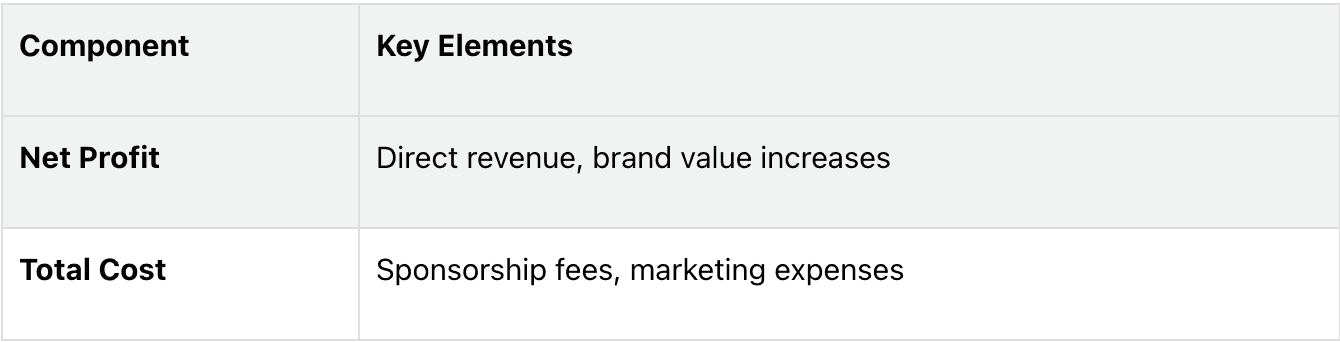
To measure ROSI effectively, you need clear goals, detailed cost tracking, and advanced tools for accurate data attribution. This involves combining insights from multiple sources:
When assessing ROSI, look at both short-term financial returns and broader long-term benefits. Some sponsorships may not yield immediate profits but play a key role in enhancing brand image and fostering customer loyalty. Strong ROSI outcomes also give you more leverage when negotiating future sponsorship agreements.
To make sponsorship metrics work effectively, you need a structured plan supported by the right tools.
Integrating data from different sources, like social media and in-stadium promotions, into a single analytics system provides a clear picture of performance. Specialized platforms can simplify this process:
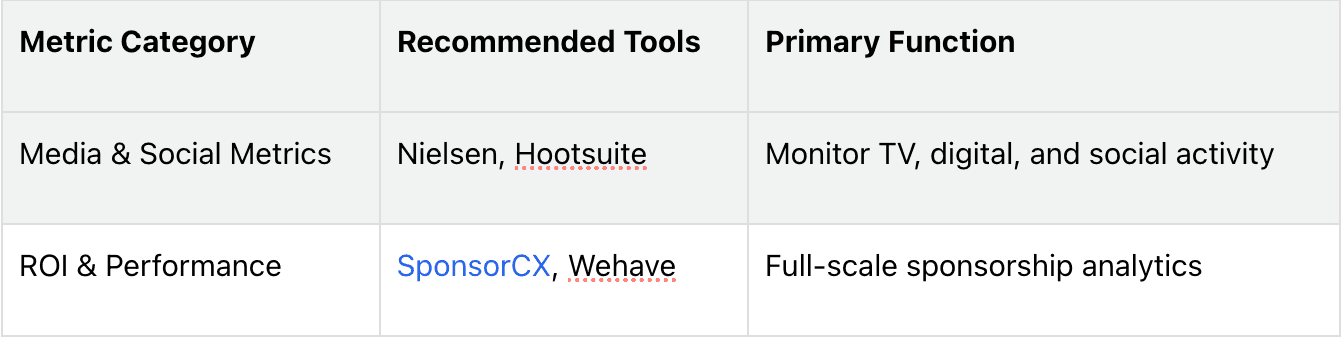
Sports marketers using advanced analytics platforms can link sponsorship actions directly to fan behaviour, track conversion and fan-generated revenue, and leverage data to target campaigns and drive conversion - rather than guessing which activations are working.
“The use of detailed analytics and a variety of metrics helps in developing precise methods for evaluating sponsorship ROI, enabling sports marketers and sponsors to make data-driven decisions and maximise value from sponsorship deals.”
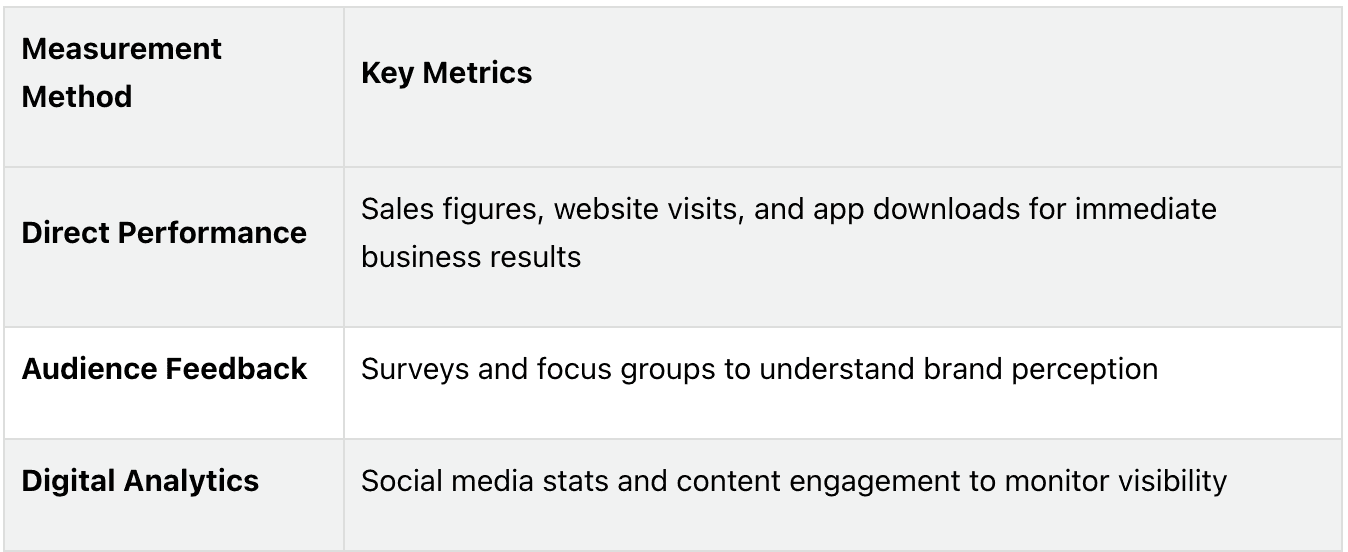
In addition to numbers, post-event surveys and sentiment analysis provide valuable insights into audience opinions - adding depth to the data that pure analytics cannot capture. The goal is a unified data system that continuously refines future campaigns.
Here are some common ways to measure sponsorship success:
Brands now have the tools and strategies to fine-tune their approach and get the most out of sports sponsorships. Measuring ROI goes beyond counting impressions - it is about using the right combination of metrics to truly assess and improve the value of sponsorship investments.
The seven metrics above work as a system, not a checklist. Each one reveals a different part of the story: reach tells you who saw the brand, interaction tells you who engaged, sales tells you who converted, CLV tells you who stayed. Together, they give commercial teams the evidence they need to defend every investment - and grow every partnership.
How can a company determine if a sponsorship has been effective?
Evaluate performance across the entire marketing funnel - from building awareness to fostering loyalty. Track both quantitative metrics (sales, leads, reach) and qualitative insights (brand perception shifts, sentiment). The most complete picture comes from combining short-term outcomes like conversions with long-term indicators like customer retention and market positioning.
What is ROSI and how is it calculated?
Return on Sponsorship Investment (ROSI) is calculated by dividing net profit - which includes direct sales, brand value increases, and CLV - by total expenditure (sponsorship fees plus marketing costs). Unlike basic ROI, ROSI accounts for both the immediate financial return and the broader long-term value a sponsorship generates.
How does Customer Lifetime Value differ from direct sales as a sponsorship metric?
Direct sales measure immediate revenue tied to a specific campaign or event. CLV takes the longer view - estimating how much total revenue a sponsorship-acquired customer will generate over their entire relationship with the brand. A sponsorship with modest direct sales but high CLV can be more valuable than one with a big initial spike but poor retention.
wehave gives commercial teams everything they need - contracts, rights, live inventory, delivery, partner portals, hospitality and AI - in one place.
Book a demoBook a demo
Forty-five minutes on the platform rather than in a deck: your competition, your partners, your seats. Nothing to fill in first, and no follow-up needed afterwards.